Quick verdict
The 2471-20 is a candidate for repeated cuts in the specified copper-pipe range, not a universal refrigeration tubing cutter. Its nominal 3/8-to-1-inch range corresponds to actual outside diameters of 1/2 to 1-1/8 inches; check your lines before buying.
This is a research-based review of the exact model, using the linked official documentation and original buying analysis. We have not performed hands-on or comparative testing. Amazon customer reviews and star ratings are not reproduced or represented as independent evidence.
The size label is the most important detail
Milwaukee identifies the 2471-20 as an M12 copper tubing cutter for Type K, L, and M copper. The published range is nominal 3/8-inch through 1-inch copper pipe, corresponding to actual outside diameters from 1/2 inch to 1-1/8 inches. The tool is listed at 500 rpm and requires as little as 1-1/2 inches of clearance in the documented arrangement.
That nominal-size distinction is essential for HVAC buyers. Refrigeration tubing is commonly identified by outside diameter, so a 3/8-inch refrigerant tube is not the same size as nominal 3/8-inch plumbing copper. Do not buy this cutter expecting it to cover every small line in a service kit.
Use actual outside diameter to check fit
Write down the outside diameters you cut most often, not just the names used at the supply counter. Then compare them with the current manufacturer table. If small liquid lines dominate the workload, a hand cutter with the appropriate small-diameter range may solve more of the actual job.
For repeated larger copper preparation within the supported range, powered cutting becomes a more relevant proposition. The question is not whether the tool can cut copper in general. It is whether its exact range, supported material, and operating space match enough of your recurring work to justify another powered item.
Clearance is a complete-tool measurement
The minimum-clearance claim needs to be read with the manufacturer’s arrangement, rather than treated as a promise for every wall cavity or equipment cabinet. Battery position, pipe supports, neighboring lines, and the area needed to position the tool can decide whether a particular cut is practical.
A useful pre-purchase check is to compare the complete tool geometry with a representative installation location. A cutter can fit the pipe diameter yet fail to fit between nearby obstructions. A small manual cutter may remain useful even after a powered cutter is added to the kit.
Cutting is only the first preparation step
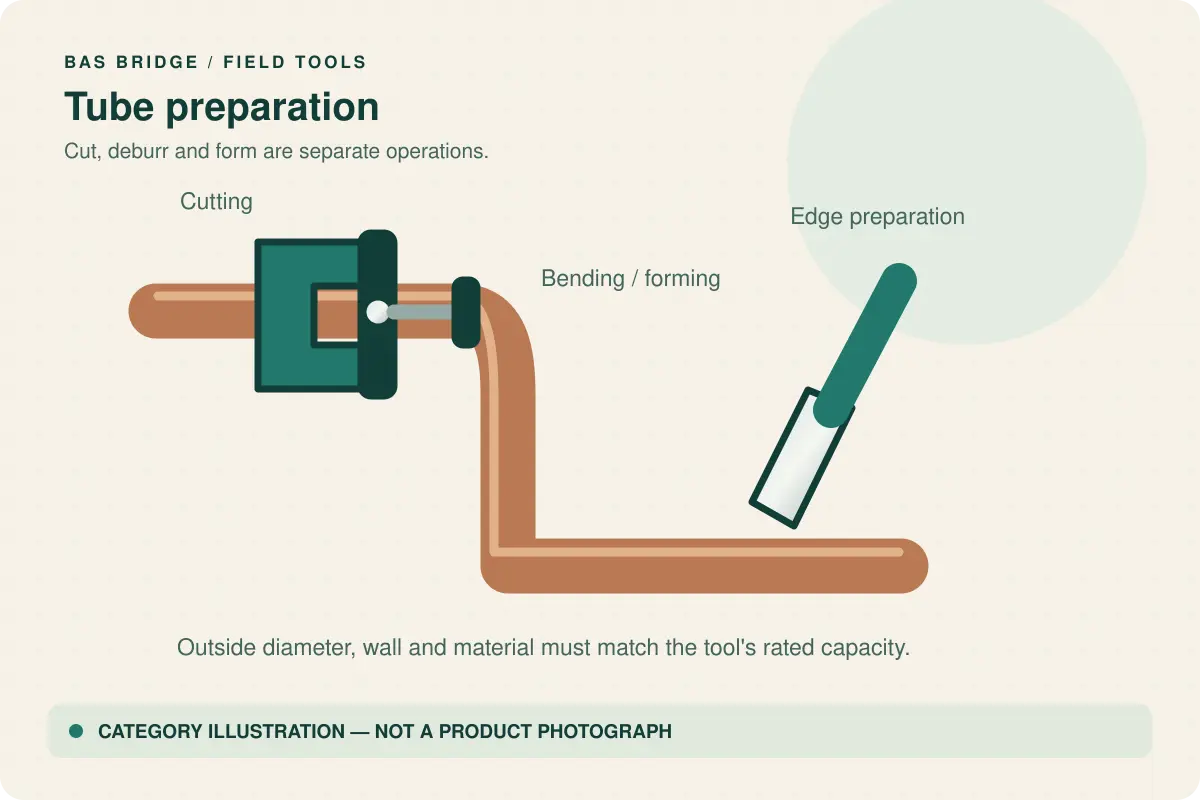
After separation, inspect the tube end against the requirements of the next joint. Check for deformation and address burrs with the appropriate method while controlling debris. The required preparation differs with the joining system; cutting alone does not establish that a tube is ready for flaring, brazing, or another connection.
The review does not provide a universal service procedure for an existing refrigerant or water line. Establish the system condition and follow the relevant work instructions before cutting. The manufacturer’s support for a copper type does not make cutting a pressurized or otherwise uncontrolled line acceptable.
What the powered format adds
The reason to consider the 2471-20 is repeated cutting within a suitable range and working envelope. It may reduce the manual turning associated with a hand cutter, but we have not timed either method or measured fatigue. A numerical claim about saved labor would require comparable material, access, and completed cuts.
Power also adds batteries, charging, and more equipment to carry. If a few accessible cuts are typical, a manual cutter may be sufficient. If compatible copper cuts recur throughout installation work, the powered format deserves a closer comparison. Buy against a repeated task rather than an assumption that every manual operation should be motorized.
Manual alternatives remain useful
The RIDGID 103, 104, and 101 reviews in this library cover different documented outside-diameter ranges. Their range differences matter more than the superficial similarity of their names. The small 103, for example, addresses tubing below the powered cutter’s minimum outside diameter.
Those are task-based comparisons, not measured performance rankings. Choose the combination that covers your actual diameter range and access needs. A powered cutter for appropriate installation pipe and a compact manual cutter for smaller service tubing can be complementary rather than redundant.
Purchase checks and the verdict
The 2471-20 is a tool-only model. Include compatible M12 power, replacement cutting components, and current support terms in the cost comparison. No current price, blade or wheel life, cutting speed under load, or battery runtime has been verified by independent testing here.
Before ordering, match the exact model and contents, inspect the current size table, and check seller and return support. Choose it for supported copper-pipe work within the actual 1/2-to-1-1/8-inch outside-diameter range. Keep the nominal-size warning visible, because that single detail can prevent the most expensive kind of tool mistake: buying a well-made tool for the wrong work.
Reasons to consider it
- Powered cutting can suit repetitive compatible copper work.
- The manufacturer documents the supported copper types and size range.
- The stated clearance requirement provides a useful access check.
Tradeoffs to consider
- Small 1/4-inch and 3/8-inch outside-diameter refrigerant lines are outside the stated range.
- The copper-pipe specification must not be generalized to other materials.
- The tool-only package requires a compatible battery; speed and finish were not independently tested.
Manufacturer specification reference
Milwaukee · 2471-20 · Milwaukee 2471-20 M12 Copper Tubing Cutter
These are manufacturer specifications, not independently measured results.
- Supported copper
- Type K, L and M
- Nominal pipe range
- 3/8 to 1 inch
- Actual outside-diameter range
- 1/2 to 1-1/8 inches
- Rated speed
- 500 rpm
- Minimum stated clearance
- As little as 1-1/2 inches in the documented arrangement
- Package
- Tool only
Related BAS Bridge learning
Sources & verification
Follow the current manufacturer instructions for your exact model. Specifications and source revisions can change.
- M12 Copper Tubing Cutter ↗
Official model documentation checked for the features and limits discussed in this original research review. Specifications are manufacturer claims; buying judgments are editorial analysis.
Checked Nov 2, 2026 · Source publication date: Unknown
Editorial context
Independently written BAS Bridge research review. Manufacturer features are distinguished from editorial judgments. No firsthand use or measured comparative performance is claimed. Amazon customer reviews and star ratings are not copied or synthesized into ratings.
The linked official product documentation was checked on November 2, 2026. This article combines documented features with original task-based analysis. No physical testing, service-call use, Amazon customer-review consensus or independent performance measurement is claimed.
No current price, stock level, customer star rating, or measured reliability rate is implied.
Methodology & disclosure →